
Whitepaper
New Depression Screening Mandate Ties Directly to Your Reimbursements
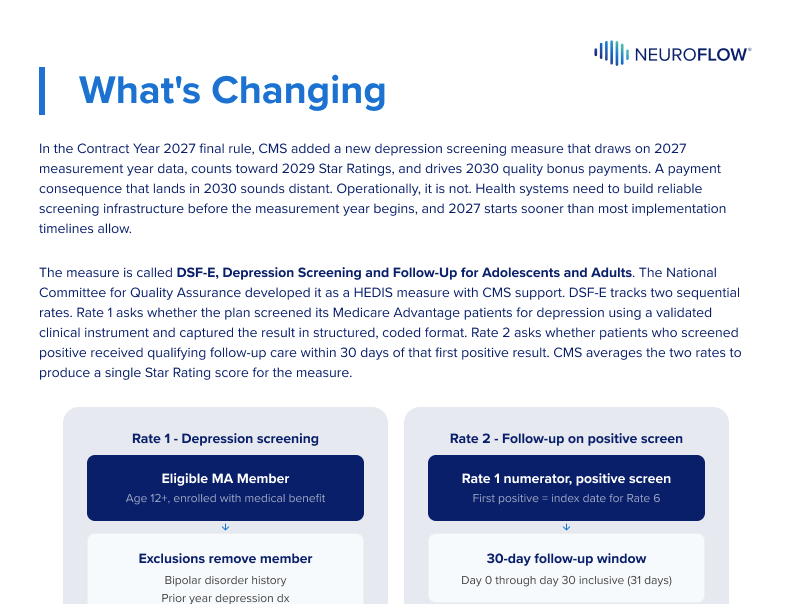
Your health plan partners must meet a new behavioral health measure to maintain their Star Ratings, but the execution will fall on health systems. CMS calls it DSF-E (Depression Screening and Follow-up). Your health plan partners will make this metric a key factor in your next reimbursement conversation. Download our latest whitepaper to prepare for this change. You'll learn:
- How DSF-E performance could shift your P4P incentives and risk-based contract terms
- Why most EHR-based screening workflows will fail the follow-up requirement
- What health systems already ahead of this are doing to automate compliant screening and follow-up at scale

Depression Screening Is Now a Financial Imperative
New Star Ratings Measure
CMS added DSF-E to Medicare Advantage Star Ratings — making depression screening and follow-up a direct driver of plan performance and bonus revenue for health systems
30-Day Follow-Up Requirement
DSF-E requires documented follow-up within 30 days of a positive screen. Most health systems lack the workflows to consistently meet this standard across their Medicare population
Significant Financial Exposure
Each star rating point affects Medicare Advantage bonus payments. Health systems that fall behind on DSF-E risk real, measurable revenue loss
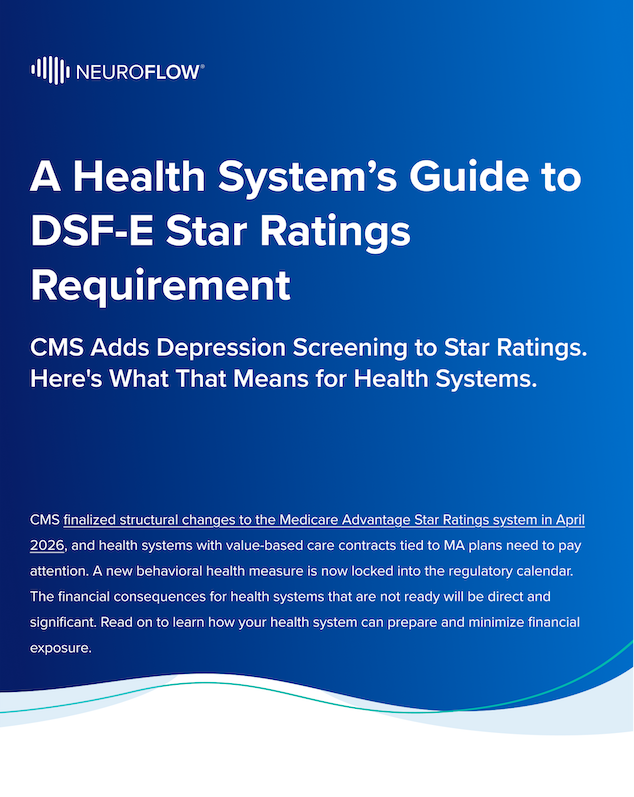
What DSF-E Actually Means for Health Systems – and Why Most Aren't Ready
CMS's addition of DSF-E to Medicare Advantage Star Ratings is one of the most consequential behavioral health quality changes in years, and it's tied directly to your organization's financial performance.
This guide gives health system leaders a clear-eyed view of what DSF-E requires, where current approaches break down, and what it takes to build the automated, end-to-end screening infrastructure that turns a compliance burden into a quality win.
NeuroFlow Is Trusted By Leading Healthcare Organizations